In the Alcove of the Unasked

AI Image

Sanaa invites the dVerse poet community to delve into their dreams as a rich source for literary expression. I have been attempting this the last little while and offer this nugget in the raw for self-edification more than anything!

I walked the long coast,
salt in my lungs,
hunger in my bones,
seeking a table not yet set.
The café was hollow,
a shell of welcome,
bare but for one alcove
where laughter gathered like tide.
I asked to sit
not knowing if I belonged
and they made room,
as if grace were a game
played by strangers
who knew the rules of kindness.
They spoke in riddles,
a missing word,
a misting truth,
and I, still faint from the walk,
asked if the question itself
was broken.
Is it “missing”
like a name forgotten,
or “misting”
like memory blurred by time?
And they nodded,
not with answers,
but with presence.
So I sat,
Stockman’s pie in hand,
and let the mystery feed me.

(c) Dennis Ryle, November, 2025

Tripping

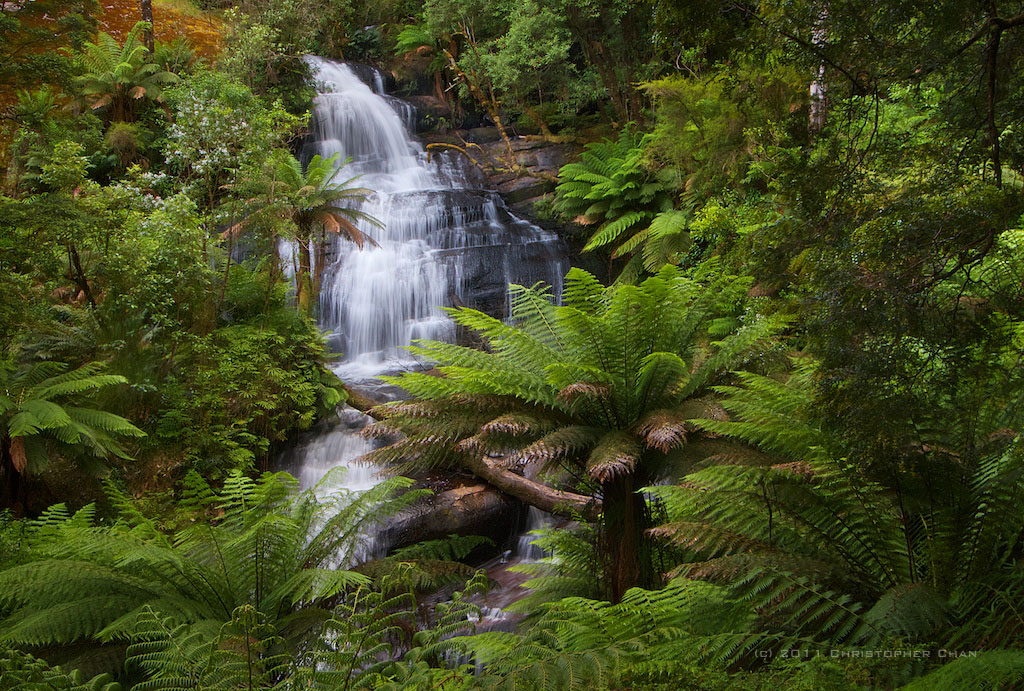
Triplet Falls, Victoria, Creative Commons

If one might take a trip,
One could consider Triplet Falls
or Tripod Waterhole
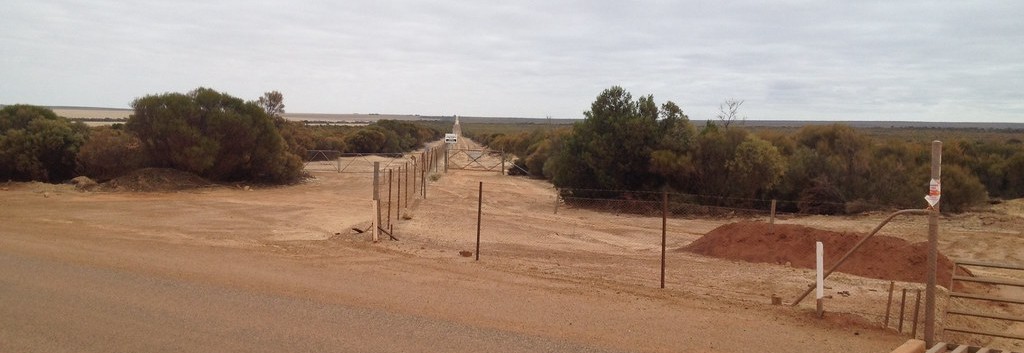
Can we get there by Trip Point Road
Or via Trip Creek Station?
Only a 2700-kilometre road trip
can link them.
(Those we can find)
Fill her up!
Who’s coming?

(c) Dennis Ryle, January, 2026

This is my response to Punam’s dVerse prompt to write a 44-word quadrille using the word “trip.” As a veteran of many long road trips through this wide, mostly brown land, I looked on the map for place names containing the letter sequence “trip.” We’ve not been to any of them, so… one day?

Lines Across a Divided Country

I’m learning things about poetry I’ve never previously been aware of. It seems that one can enter a conversation with a well-known poet by writing a glosa – taking four lines of any of their works and incorporating them in a particular expansion in one of your own. Björn Rudberg is today’s dVerse host, guiding us to have a go at this genre

So on the eve of one of Australia’s most contentious days, I’ve selected Banjo Paterson’s We’re All Australians Now. He wrote it in 1916, addressed to front-line WWI soldiers, reflecting on a newly evolved sense of national unity in the wake of the Gallipoli campaign, a failed military project, but a significant contributor to an independent and resilient national identity. Read it in full here. Over a century later, our feeling of unity is rather shattered, so here is an opportunity to dialogue with one of this country’s most celebrated bards over the matter.

Australia takes her pen in hand
To write a line to you,
To let you fellows understand
How proud we are of you.

– from “We’re All Australians Now,” Banjo Paterson, 1916

Canberra’s had a week of it
Of pollies’ hot air squawk
You’d think that they’d pull back a bit
And think before they talk
So now the coalition’s split
And we wonder how things stand
Reprising a time when it was fit –
Australia takes her pen in hand.

It seems that when we speak of unity
There’s much more that divides
Whate’er we hold up for scrutiny
Has us rushing to take sides
To find a middle voice
Between all points of view
Leads us to this choice
To write a line to you.

Climate change ignites a spark
as fire, wind, and floods increase
Yet every warning turns to bark
in quarrels that never cease
First Nations hold the know-how
To tend this wide brown land
Their ancient voice speaks even now
To let you fellows understand.

Instead, we play one-upmanship
on things meant to bind, not part
while trying not to lose our grip
and heal a broken heart.
Yes, once there was a common cause
that held us fast like glue
Enough to write without a pause
How proud we are of you.

Finis

Bluff Knoll’s White Christmas

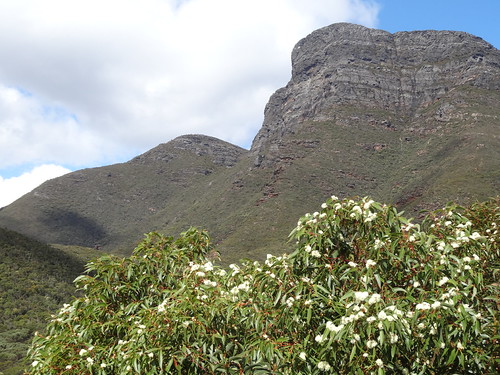
Bluff Knoll, Creative Commons

It happened on Christmas Day in ‘ninety-eight
A once-in-a-lifetime event!
Western Australia’s only “White Christmas”
at the height of summer.
Not just a light dusting
Twenty centimetres blanketing the summit
Two years before a new millennium
Harbinger of stranger things!

(c) Dennis Ryle, January 2026

This is in response to the dVerse Poetics invitation sent out by Kim. It is inspired by snow as an accompaniment to new beginnings, inspired by the turn of the year. Well, not much of that in a hot Aussie summer – but there was that one occasion. And Christmas is close enough to the New Year to count.

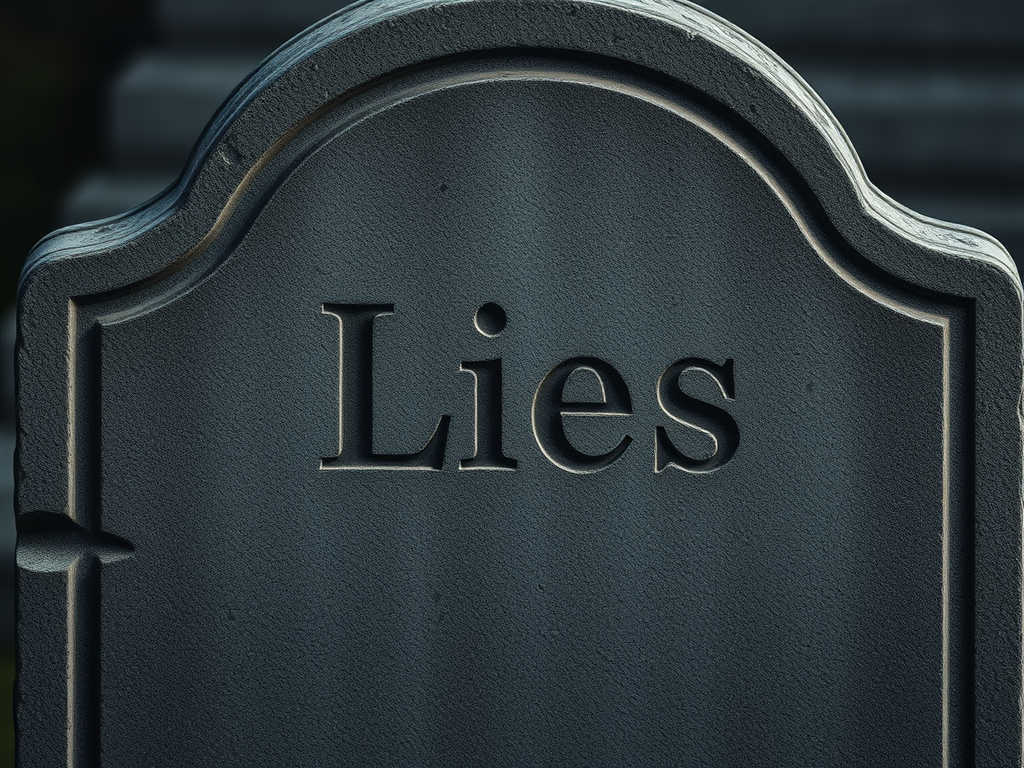
Here lies lies!

Lisa invites the dVerse community to take a line from the song “Bury Me,” by Alejandro Escovedo . The task is to write a 144-word “prosery” piece using the exact phrase Bury me with lies I told. I am delighted and somewhat energised to rise to the challenge!

Bury me with lies I told, as into these baptismal waters I descend. Falsehoods of worthlessness and self-negation. Chains of caution and inadequacy. Suspicions of motives and projections of intentions. Standing watch against imaginary phantoms. Scanning horizons for absent adversaries.

I sink beneath the surface, buried with Christ and all the lies I told myself.

And I arise anew! No more chains, for they were buried with my fabrications. New purpose breaks forth as unsourced light divides the dark mystery. Tendrils of the old lies sometimes writhe and search from the old musty graveside. They are weak and cannot hold. The light burns and they shrivel. They retreat and wait for yet another faltering step, when they might attempt to take hold again. But they have taught me well. Discerning caution and courageous guard can  serve the Light equally well. This is daily work!

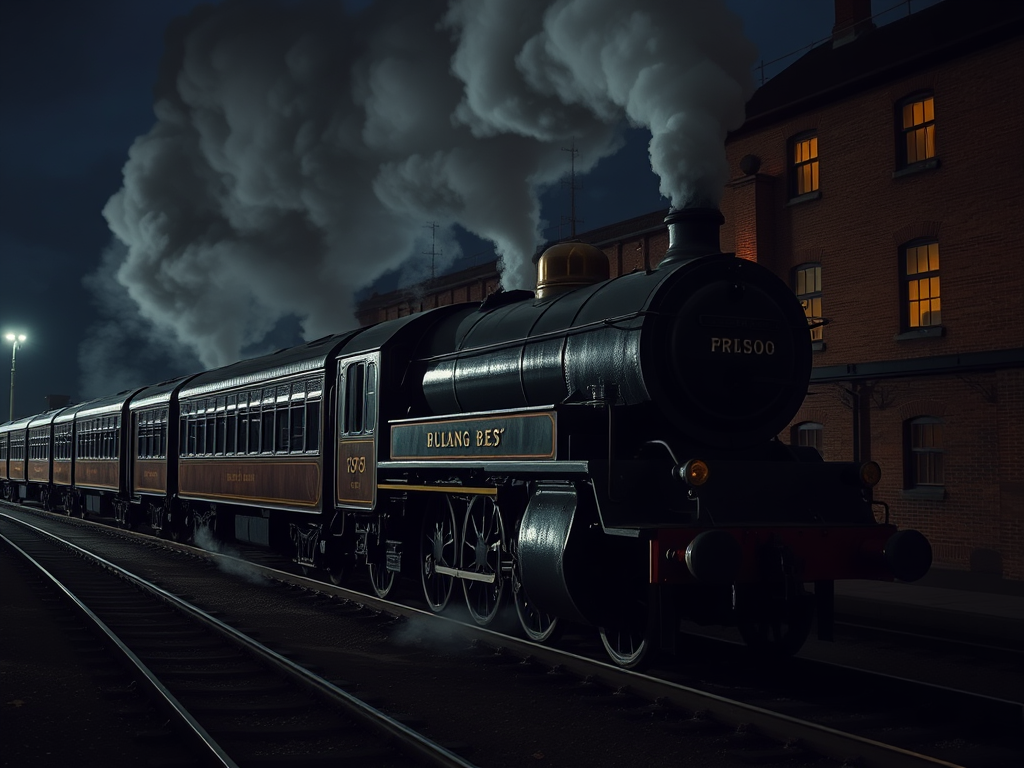
The Train We Can’t Board

AI image

Melissa from Mom With a Blog is our dVerse host right now. She is immersing us in Johnny Cash’s Folsom Prison Blues, trusting it will inspire our muse. Here’s my melancholy effort. Please don’t counsel me, I’m trying to sit within the skin of another!

He came to spring captives free
That young rabbi from Galilee
But maybe I prefer these bars
Within them, I can nurse old scars
Yet still peer up to the stars.

Somewhere, a train whistle moans
Its echo vibrates through my bones
Mournful, ‘cos though freedom is its way
Safe routines keep us prisoners at bay
So it passes by, while we choose to stay.

(c) Dennis Ryle, January, 2026

SMILE

MAD Magazine’s Alfred E Neuman – Creative Commons


Smile! – What if I don’t feel like it?
Write a poem about it – a quadrille – exactly forty-four words!
The rebel arises within me.
So many fake smiles crowd memory’s vault
Concealing assassins’ intent.
Besides, I have a missing front tooth
My smile appears uncouth!

(c) Dennis Ryle, January 2026

De Jackson (aka WhimsyGizmo) points out it’s the first Quadrille Monday of the year at dVerse! “The Q is my fave, and today I thought we’d just try starting the year off with a SMILE.” I smile a lot when prompted from within – but never from external urges!
I guess my quadrille reflects my inner rebellion on many things – and it was somewhat cathartic to write! Grumpy Old Man is this morning’s muse!


ABCalling

AI image

A New Year venture awaits
Begging towards taking up pen
Calling projects forth from fevered mind

Dickens started it all
Energising my adolescent Curiosity Shop
Fanning flames that fired imagination
 
Great Expectations glowing with anticipation
Hard Times intervened
I reluctantly laid pen aside

Just as I had given up all hope
Kilburn school opened an opportunity
Leaning into new learning

Mastering turns of phrase
Never looking back
Opportunities began to beckon

Positioning myself anew
Questioning old paradigms
Revising tired old plans

Stimulated by fresh calling
Travelling into brand new territories
Unpacking stale expectations for new expectancy

Vexations aplenty
Worries about untried trails
Xenos of spirit hosts me through

Yearning towards completion
Zephyrs urge me on.

(c) January 2026 Dennis Ryle

Our host today at dVerse – the Poet’s Pub is Laura, inviting us to try an Abecedarian and write a 26-line poem, each line starting with the next letter of the alphabet. The letter “X” is always tricky—it’s tough to go beyond X-rays and xylophones without reaching for something unusual, but I’m fond of “xenos,” a word that captures the spirit of ancient hospitality.

Traffic Lights

Photo courtesy of Flikr

Dark, grey, tinted, large and ominous,
the plate reads 01DRAGON,
its gaze catching mine in the mirror of my headlamps.
This minotaur lurks at a red light,
where the chaos of the unfinished Stirling Mitchell Freeway Interchange—
labyrinth or maze?—
frustrates those who travel,
longing for a clear path,
avoiding Innaloo rat-runs,
steering through roadworks,
ducking Cedric Street tree-lopping.
My small, battle-scarred Kia,
its cracked dashboard whispering pedigree and possibility,
locks eyes with its quarry.
The light flips green.
The beast slips away.
And we surge forward into freeway freedom.

This poem seeks to respond to Dora’s dVerse challenge to write a piece in the style of Elizabeth Bishop – emulating her characteristic style of accuracy (detail), spontaneity (immediacy), and mystery (revelation)

Epiphany Haibun

Samuel Palmer, Sunset (ca. 1861). Yale Center for British Art. Public Domain.

Stranger Things hints at dimensions that are closer than our own breathing. The mood is dark, sinister and compelling. The world as we thought we knew it is transforming. Thin places once hinted at glorious light. Now they also open hazards, concurrently concealing and revealing the dread of the yawning abyss.

Yet another dimension, more ancient, more new, more true, invites discovery, often hiding in plain sight. It is the stance of attentiveness that receives it. Cultivating capacity for awareness fleetingly opens its portals. Our feet tread infinity. Our hearts burst with an incomprehensible passion. Our eyes are all but blinded by a light that is beyond all light.

Once, long ago, ancient astronomers traced a new star. It led to a place where this dimension burst into open and persistent perception. It continues to hide in plain sight!

Vision of glory
A gum tree shining with light
Evokes tears of joy

This piece was created in response to an invitation from dVerse to write a haibun on Epiphany. A haibun is a brief composition made up of several paragraphs of prose, ending with a haiku—three lines of poetry in the 5-7-5 pattern that reflect the current season.